It is the matching of information in these key fields—often fields with the same name in both databases—that makes an entity relationship work. One common example of a matching field is the primary key from one table and a foreign key from another. The primary key is what gives each record in one table its unique identifier.
Each table in your database should have a primary key that uniquely identifies the information stored within. Foreign keys are assigned to the corresponding tables that make use of those primary keys. Multi-table queries and table connections rely on these foreign key-primary key pairs. These primary key and foreign key references must be kept in lockstep.
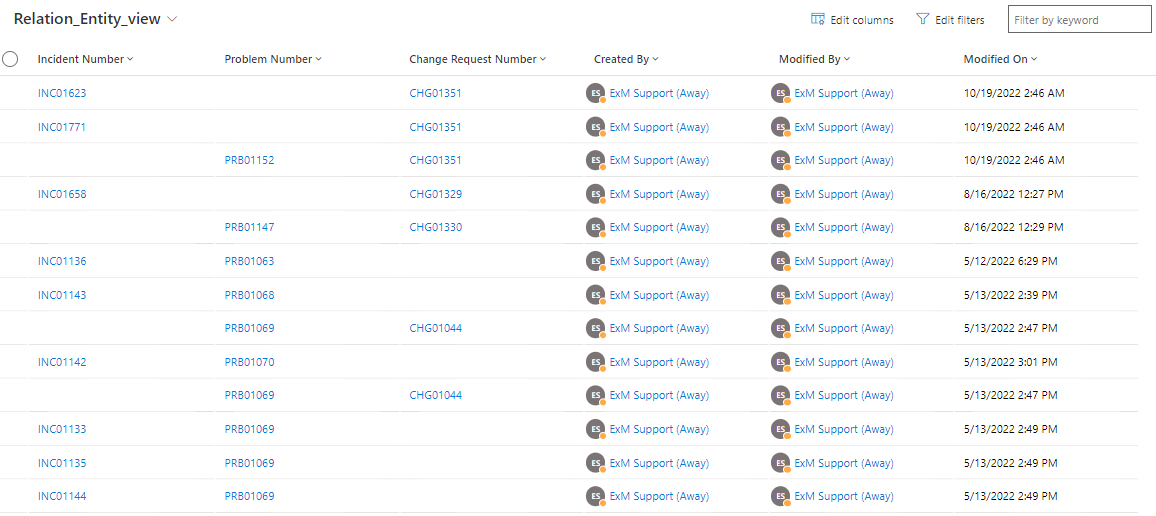
To view the relationship data, Navigate to Administration > SM Entity Relationship.
All the relationship for modules is displayed.